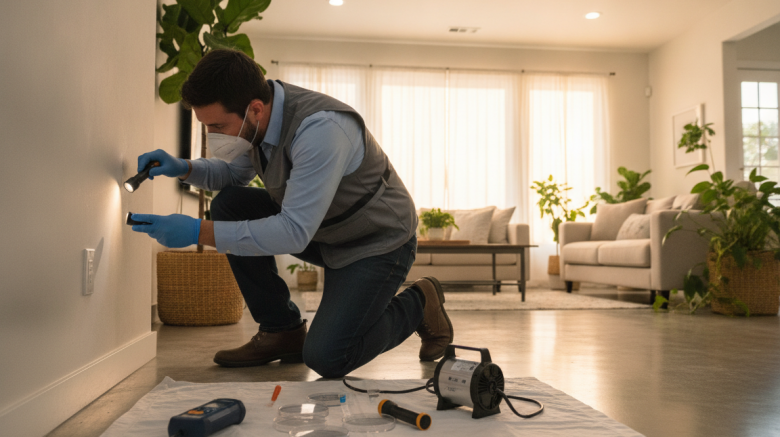
It is astonishing how quickly mold can spread in properties with unnoticed leaks. Within weeks, mold spore counts may skyrocket by over tenfold. That rapid proliferation highlights the important importance of Fungal Testing & Inspection in Los Angeles for all homeowners and renters.
Finally Know What’s Growing Behind The Walls
The journey of Fungal Inspection in LA began with the founders witnessing the devastating effects of concealed mold on families. They aimed to prevent serious health risks by identifying mold early. Their team’s commitment is to deliver clear, science-backed answers through detailed fungal testing & inspection in Los Angeles.
This company serves the Greater Los Angeles metro area, focusing on residential and business mold testing. Professionals offer inspection-only services to maintain impartiality. With over 20 years of experience and thousands of investigations, their expertise includes identifying dampness sources, considering HVAC and airflow, and using non-invasive assessment methods.
This article will detail the role of a Los Angeles mold inspector, the significance of routine testing, what to expect during a professional assessment, and the necessary actions if elevated spore counts or contamination are detected.
Why Scheduled Fungal Assessment Matters For Los Angeles Properties
 Mold Testing For Curious Homeowners
Regular assessments are essential for catching small problems before they escalate. In Los Angeles, damp areas behind walls or under flooring can harbor concealed mold colonies. Those colonies release spores into living spaces. Routine IAQ assessment delivers property owners with the data needed to address early signs of fungal impact.
Exposure to mold can lead to a variety of symptoms. People may experience a stuffy nose, throat irritation, coughing, wheezing, eye soreness, or skin rashes. Those with mold allergies often react severely to even low spore counts. Immune-compromised individuals and those with chronic lung disease are at a higher risk of serious infections from certain fungal species.
Los Angeles’ microclimates significantly influence moisture levels inside properties. Coastal fog, seasonal rains, and localized humidity, combined with past water intrusion, create ideal conditions for mold growth. Mold thrives on spores, a food source such as drywall or wood, and moisture. Hidden leaks, flooded carpets, or high indoor humidity deliver the necessary conditions for growth.
Toxic mold screening is important when occupants report persistent symptoms without visible staining. Testing can identify elevated fungal counts and specific species that pose greater health concerns. Focused toxic mold screening is necessary for shaping remediation plans and clearance testing after cleanup.
Routine evaluation is vital after any water event. Flooding, burst pipes, and undetected roof leaks can seed unseen pockets of mold. One scheduled campaign of mold testing & inspection in Los Angeles uncovers moisture hotspots and early expansion before structural damage occurs.
Protecting vulnerable household members requires proactive measures. Routine indoor air quality testing in Los Angeles helps clinicians and contractors link symptoms to indoor exposures. Assessment informs decisions about remediation, containment, and whether replacement of porous materials is necessary.
Agencies such as the CDC and EPA emphasize the importance of moisture control and timely cleanup for small mold problems. For large or concealed fungal impact, expert assessment is recommended. Working with credentialed inspectors ensures testing is performed using recognized protocols and that outcomes guide safe, practical interventions.
| Reason for Testing | How Assessment Helps | If to Book |
|---|---|---|
| Unexplained health symptoms | Pinpoints elevated spore counts and likely species | Updated repeated respiratory issues or new onset allergies |
| Past water intrusion | Locates concealed growth behind finishes and under floors | Following floods, water intrusions, or lasting dampness |
| High indoor humidity | Locates moisture sources and advises dehumidification | During humid seasons or in coastal neighborhoods |
| Protecting vulnerable residents | Guides remediation and clearance testing for safety | Updated returning sensitive individuals to the space |
Common Signs Of Mold And When To Call A Los Angeles Mold Inspector
Noticeable mold often gives the first clue that a home needs attention. Look for dark stains on walls and ceilings, peeling paint, blistered drywall, warped flooring, and spots of fuzzy expansion. Persistent musty odors can point to active expansion even when stains are not obvious.
Concealed mold shows itself in subtler ways. Residents who develop recurring sneezing, coughing, wheezing, or sinus irritation without other causes should suspect indoor fungal impact. One steady musty smell after cleaning, a history of flooding, roof water intrusions, or repeated plumbing failures signal areas where mold often hides behind finishes, inside wall cavities, attics, and crawl spaces.
Noticeable indicators
Discoloration, circular or irregular stains, and peeling paint often mark past or current dampness intrusion. Warped baseboards and bubbling paint can mean lasting dampness. Airborne spores may build faint black or green specks on surfaces that are easy to miss at first glance.
Hidden indicators
Condensation on windows, unexplained odors from HVAC vents, as well as damp insulation are common signs that mold may be concealed. When sensitive household members show symptoms that ease away from the property, hidden colonization should be considered. Past flood events raise the likelihood of deeply embedded contamination.
When to call a expert
Homeowners should arrange home mold assessment when visible mold covers roughly 10 square feet or more, after significant water intrusion, or when occupants with allergies, asthma, or weakened immune systems become symptomatic. Buyers and sellers also Benefit from a professional mold assessment before real estate transactions to document conditions objectively.
How hire a credentialed specialist instead of relying on DIY checks
Certified inspectors bring formal credentials and field-tested protocols. They use calibrated dampness meters, FLIR thermal imaging, and standardized sample collection to pinpoint moisture sources and collect representative test samples for lab analysis. Those seeking dependable black mold detection, unbiased findings, and clear next steps should choose an independent evaluation-only firm to avoid conflicts of interest with remediation providers.
| Updated or Situation | Which it Suggests | Updated Action |
|---|---|---|
| Noticeable dark stains or fuzzy expansion | Active surface colonization | Document area, arrange home mold assessment, isolate affected space |
| Updated paint, warped flooring | Ongoing moisture intrusion | Inspect roof, plumbing, and HVAC; book expert mold evaluation |
| Musty odor without visible mold | Hidden mold in wall cavities or ductwork | Engage a Los Angeles mold inspector for focused sample collection and thermal scan |
| Recurring respiratory symptoms in occupants | Updated indoor air quality issue | Pursue air sample collection and black mold detection through credentialed testing |
| Post-flooding or major leaks | High risk of extensive fungal impact | Immediate professional mold assessment and documented clearance assessment |
Mold Testing & Inspection In Los Angeles
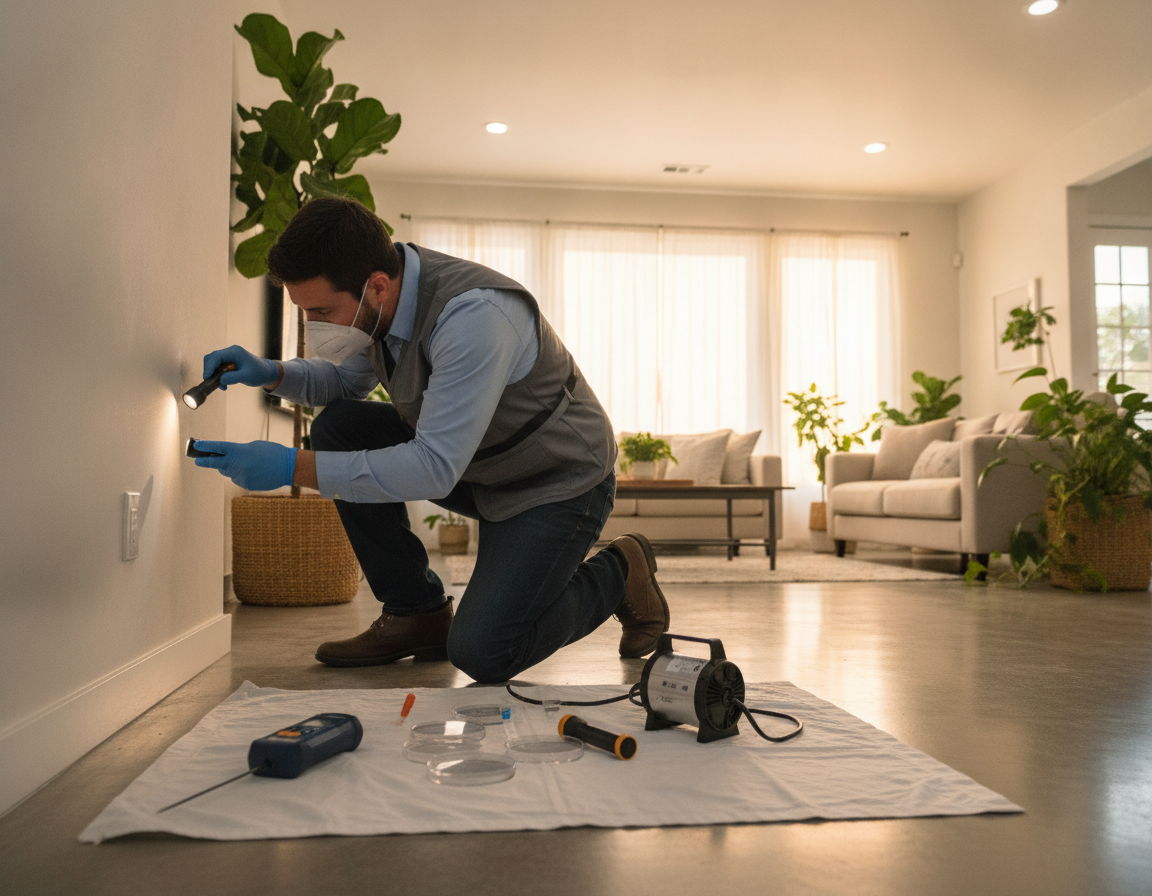
A detailed evaluation commences with a meticulous walkthrough of the building. This Los Angeles mold inspector meticulously documents any visible mold, stains, warped materials, and possible water intrusion paths. Special attention is given to attics, crawl spaces, basements, HVAC plenums, and appliance areas to uncover concealed moisture sources.
Which A Expert Inspection Includes
Inspectors conduct a thorough non-invasive visual survey, documenting building materials, maintenance issues, and occupant complaints. Dampness evaluation employs pin and non-contact moisture meters, along with relative humidity readings, to identify wet areas. FLIR thermal imaging is used to detect concealed temperature and dampness anomalies, guiding the selection of samples for further review.
IAQ Assessment And Air Sample Collection
IAQ assessment involves comparing indoor and outdoor spore counts to detect elevated fungal impact levels. Air sample collection attracts airborne fungal particles and particulates for laboratory identification. Laboratory reports detail the fungal genera and approximate concentrations for each test sample, aiding in determining fungal impact levels and the scope of remediation required.
Sampling Plans: Types And Placement
One customized sampling plan is developed based on the property’s specific evaluation. Typically, homes require two to three initial samples. Typical sample types include air test samples, surface swabs, and tape lifts. Sample locations are determined by dampness readings, thermal anomalies, noticeable expansion, occupant symptoms, and past water events.
Each sample adheres to a chain-of-custody protocol and is analyzed by a credentialed laboratory. Calibrated sample collection instruments and documented protocols ensure the integrity of the outcomes. Inspectors may expand sample collection if preliminary outcomes indicate unexpected elevations.
Specialty Protocols For Sensitive Clients
Customers with mold-related illnesses, such as chronic inflammatory response syndrome, receive specialized protocols. The credentialed mold expert employs measures to minimize cross-fungal impact, increases sample collection density, and follows strict contamination-avoidance steps. Coordination with medical practitioners is necessary when test planning necessitates a clinical context.
| Inspection Component | Goal | Common Tools |
|---|---|---|
| Visual Survey | Document noticeable mold, stains, and water damage | Flashlight, camera, inspection mirror |
| Moisture Evaluation | Find elevated dampness that supports mold expansion | Pin meter, non‑contact meter, hygrometer |
| Thermal Imaging | Reveal concealed moisture and guide sampling | UPDATED thermal camera |
| Air Sample Collection | Measure airborne spore counts and compare indoors vs outdoors | Updated trap samplers, calibrated pumps |
| Surface Sampling | Verify presence and type of fungal expansion | Swabs, tape lifts, sterile collection kits |
| Special Protocols | Protect sensitive occupants and ensure reliable outcomes | PPE, fungal impact control, expanded sample collection plan |
One evaluation-only method ensures impartiality. Numerous Los Angeles firms refrain from remediation work to maintain objectivity. Customers receive thorough records, lab reports, and recommendations to guide safe next steps.
Choosing A Credentialed Mold Inspector And What Certification Means
Identifying a proficient professional hinges on their credentials, training, and methodologies. One credentialed mold expert possesses documented education in sampling protocols, IAQ assessment, and fungal identification interpretation. Homeowners must verify active certifications, ongoing education, and professional organization memberships before engaging a mold evaluation service.
Certifications And Qualifications To Look For
Seek credentials such as MICRO, MIS, or CMI levels from reputable industry bodies and documented coursework in laboratory sample collection and summary interpretation. Ensure the inspector has hands-on experience with air and surface sample collection, as well as familiarity with local building materials and climate impacts in Los Angeles. Documentation of ongoing training is essential, indicating the inspector’s commitment to staying updated with best practices.
How Evaluation-Only Firms Lower Conflicts Of Interest
Independent firms, which do not offer remediation solutions, avoid the conflict of interest that can lead to unnecessary work recommendations. One unbiased Los Angeles mold inspector provides objective findings and helps customers interpret outcomes without promoting mold remediation providers. That independence safeguards homeowners, tenants, and property managers from financial and liability risks associated with mixed-service providers.
Equipment, Methods, And Quality Control
Trusted inspectors employ FLIR thermal imaging to detect hidden moisture, moisture meters and hygrometers for precise readings, and calibrated air pumps with spore traps for air sampling. Surface sample collection tools, such as tape lifts and swabs, must be accompanied by chain-of-custody paperwork and credentialed laboratory review. Routine calibration and maintenance of tools are important to ensure sample integrity and dependable outcomes during any expert mold evaluation.
Evaluating Public Trust And Reports
Review local feedback for insights into the inspector’s thoroughness, communication, and summary clarity. One skilled Los Angeles mold inspector should explain the rationale behind specific test sample locations and outline next steps if elevated spores are detected. When referrals are necessary, the inspector should suggest qualified mold removal services while maintaining an independent stance.
Pricing, Summaries, And Next Steps After Testing
This inspection summary serves as a guide for homeowners to plan their next steps. Pricing for non-invasive property inspections, covering areas up to 1,500 sq ft, starts around $350. These inspections typically include dampness readings, humidity checks, and thermal imaging.
Lab review for test samples expenses approximately $100 per sample. Common packages include inspection and sample bundles: two test samples for about $550 or three for roughly $650. Larger homes and more complex dampness issues may necessitate additional samples, increasing the overall cost.
How test sample counts are chosen
The sampling strategy is determined during the on-site evaluation. Inspectors choose test sample types and locations based on noticeable damage, dampness mapping, and health concerns. For many sensitive patients, additional test samples may be recommended to ensure thorough documentation.
What appears in the report
Reports detail findings, include moisture maps, thermal images, and lab fungal identification. Lab results outline detected species and compare indoor to outdoor spore concentrations. The reports explain the significance of species like Stachybotrys and provide recommendations for containment and remediation.
Updated for remediation
Remediation costs vary based on contamination extent and repair needs. Local remediation jobs can start at around $2,000 for minor work. Reputable contractors offer detailed proposals, enabling homeowners to compare services and prices.
Choosing the right path after detection
Upon confirming mold presence, evaluation-only firms often refer homeowners to trusted mold remediation providers. It’s essential to vet service providers for their containment methods, certifications, and written estimates before starting work.
Verification after work is done
Post-remediation clearance testing confirms that removal and containment standards were met. This process includes visual verification and targeted sample collection to ensure air quality has been restored to acceptable levels.
Updated checklist
- Check the inspection summary and ask the inspector for clarification on sample outcomes.
- Obtain at least two bids from qualified mold removal services that include detailed scope and pricing.
- Book post-remediation clearance testing after work finishes to verify successful results.
Preventing Future Mold Growth And Improving Indoor Air Quality
In order to prevent mold recurrence, it is necessary to manage dampness levels and maintain a regular cleaning routine. Simple yet effective measures, such as timely inspections and focused cleaning, significantly lower the risk of mold growth. These practices are important, given the higher susceptibility of older Los Angeles properties and properties with high humidity.
Moisture Control Strategies
Fast repair of leaks in roofs, windows, and plumbing is vital to prevent water from fostering mold growth. Utilizing exhaust fans in areas like showers, kitchens, and laundry rooms helps to expel humid air. Dehumidifiers should be employed to maintain a relative humidity below 50 percent in damp areas such as basements and garages.
Following a flood, it is imperative to dry materials swiftly as well as adhere to tested recovery protocols. Within cases of severe water intrusion, drying structural cavities and removing wet, porous items is necessary to prevent hidden mold growth that may require professional mold removal services.
Updated Maintenance Attics Crawl Spaces HVAC
Ensuring proper ventilation, insulation, and debris-free conditions in attics and crawl spaces is critical. Seasonal inspections of roof penetrations and vents are necessary to prevent dampness intrusion. Sealing gaps around plumbing runs effectively blocks humid air from entering living spaces.
Maintaining HVAC systems is equally vital to minimize airborne fungal particles. Regular support for coils and condensate pans, timely filter changes, and ductwork inspections for signs of dampness or staining are necessary. Effective maintenance in attics, crawl spaces, and HVAC systems collectively reduces mold risk and enhances comfort.
Cleaning Versus Replacement And Careful DIY Precautions
For minor, nonporous mold patches, cleaning with detergent or CDC-approved solutions is sufficient. In contrast, porous materials like ceiling tiles, carpet, insulation, and certain drywall may necessitate removal when mold is detected.
DIY mold cleanup requires protective gear, including an N95 respirator, nitrile or neoprene gloves, and non-vented goggles. Bleach should be used judiciously on suitable surfaces only, following CDC guidelines. Large-scale mold infestations, on the other hand, demand professional mold remediation providers.
Ongoing Monitoring And IAQ Assessment
Routine inspections are key to identifying issues early. Post-remediation, indoor air quality testing confirms the return to normal spore levels. High-risk properties Benefit from regular testing to ensure lasting control and the efficacy of preventive measures.
| Problem | Action | Who to Call |
|---|---|---|
| Updated or plumbing leak | Repair immediately; dry affected areas within 48 hours | Licensed roofer or plumber, certified inspector |
| Humidity above 50% | Install or run dehumidifier; strengthen ventilation | HVAC technician or environmental specialist |
| Minor surface mold <10 sq ft | Clean hard surfaces with detergent or recommended solution | Homeowner with PPE or cleaning contractor |
| Porous materials using mold | Remove and replace affected materials | Mold removal services and waste disposal team |
| Post-flood evaluation | Dry structural cavities; remove wet contents; test as needed | Indoor air quality testing firm and remediation professionals |
Summary
Routine, expert mold testing & inspection in Los Angeles safeguards both health and building. It detects concealed moisture and mold before problems worsen. One licensed Los Angeles mold inspector employs tools like FLIR thermal cameras, dampness meters, and calibrated sample collection. This delivers objective outcomes, providing homeowners with clear data and practical next steps.
Residential fungal assessment, combined with a detailed visual evaluation and targeted sampling, minimizes uncertainty. If assessment reveals elevated spore counts or fungal impact, following remediation recommendations and obtaining post-remediation clearance testing restores confidence in indoor air quality. Regular maintenance, fixing water intrusions, improving ventilation, and monitoring humidity, limits future growth.
For Los Angeles residents concerned about concealed mold, engaging a credentialed inspector provides clarity and peace of mind. Mold Inspection in LA was founded to prevent health impacts from unnoticed mold and to pinpoint issues early. After testing, act on the summary, complete recommended remediation, and maintain dampness-control practices to ensure a safer home.